Backdoor Roth IRA 2026: Step-by-Step Implementation Guide
Complete walkthrough of backdoor Roth IRA conversion. Pro-rata rule, Form 8606 filing, common mistakes, and the consolidation strategy for existing IRAs.
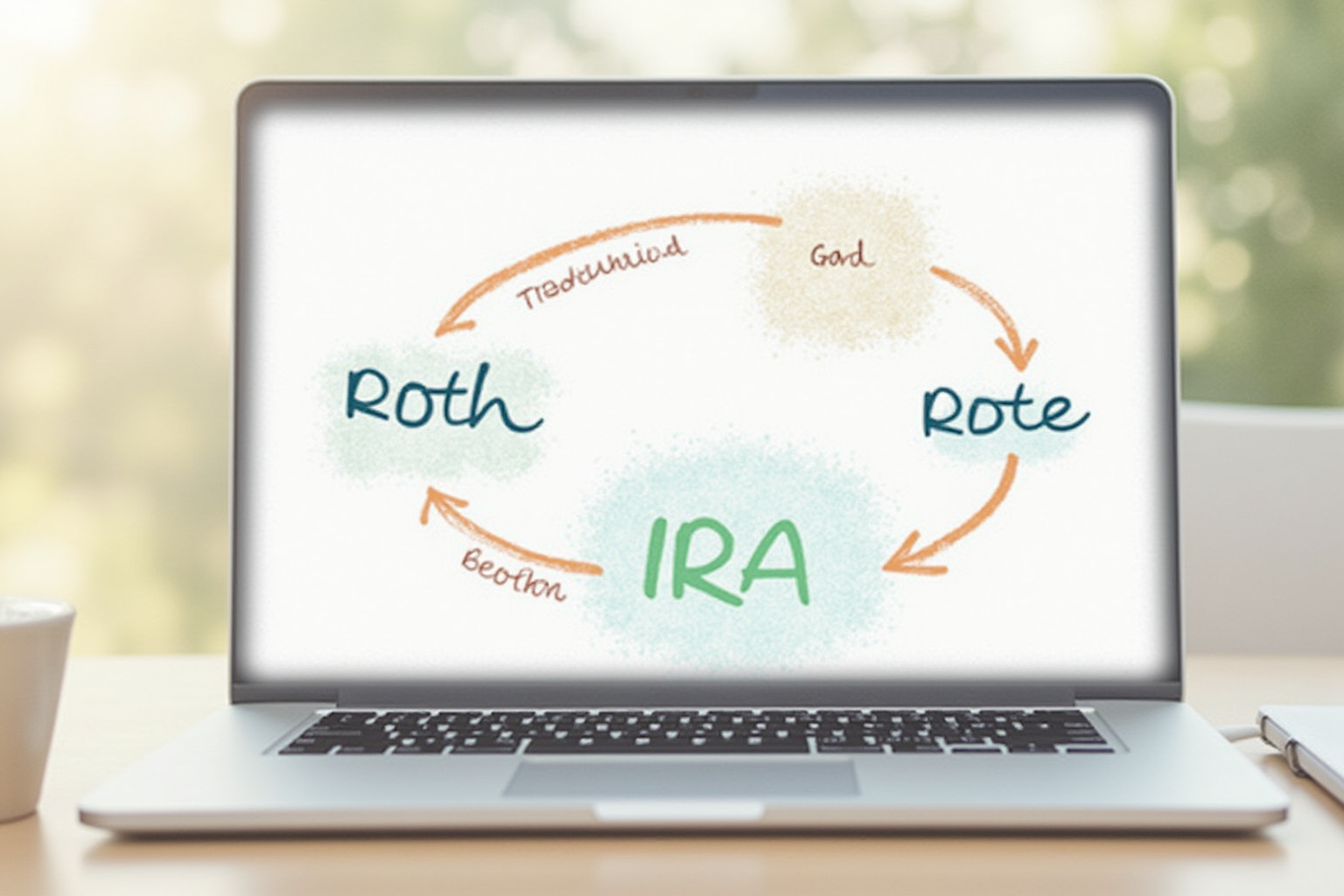
The backdoor Roth IRA is the single most important tax-strategy tool for high-income earners. It lets you contribute 7,000 dollars (2026 limit) or 8,000 dollars (age 50+) annually to a Roth IRA despite earning above the income limit that normally blocks Roth contributions. Over a 30-year career, this strategy can build 600,000+ dollars of tax-free retirement wealth that would otherwise be inaccessible. We walk through the complete implementation including the pro-rata rule trap that catches users with existing IRA balances.
Why Backdoor Roth Matters
The Roth IRA income limit in 2026 is roughly 161,000 dollars for single filers and 240,000 dollars for married filing jointly (modified adjusted gross income). Above these thresholds, direct Roth contributions phase out and become unavailable. For a married couple earning 300K, that means 14,000 dollars annually of tax-free retirement contribution space they would otherwise lose.
The backdoor structure uses two legal steps that work together. Step 1: contribute to a Traditional IRA, which has no income limit. The contribution is non-deductible because of income limits on the deductibility (a separate but parallel limit). Step 2: convert the Traditional IRA to Roth IRA. Conversions have no income limit at all. Since the original contribution was non-deductible (already taxed), the conversion creates no additional tax liability.
The result: 7,000 dollars (single) or 14,000 dollars (married) annually moved into Roth space that compounds tax-free for life and passes to heirs tax-free.
Step 1 — Verify No Pre-Tax IRA Balances
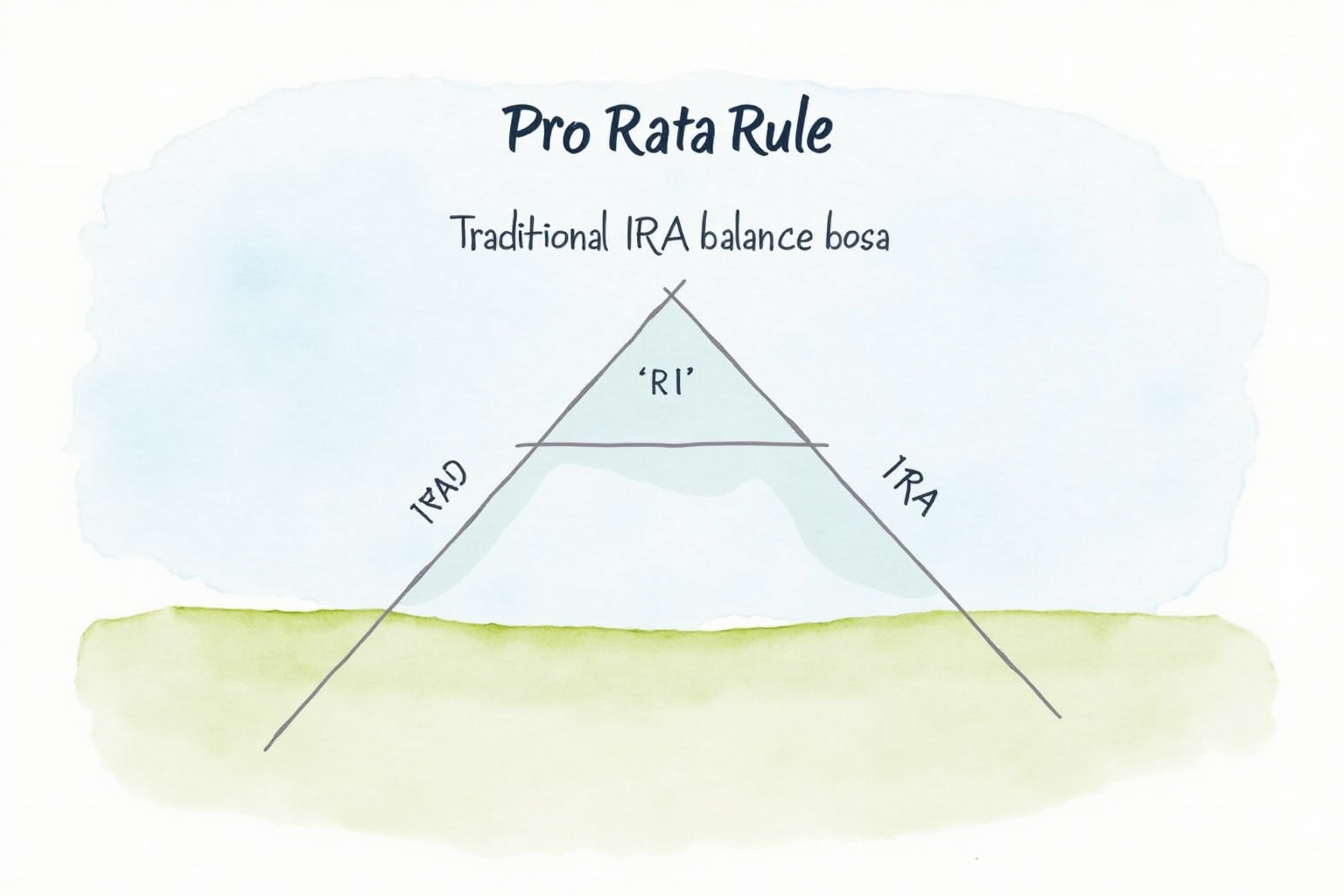
The pro-rata rule is the trap that catches most users. If you have any pre-tax (deducted) Traditional IRA money — typically from old 401k rollovers — the IRS aggregates that balance with your new non-deductible contribution when calculating conversion taxes.
Example of the trap: You have 100K dollars in a Traditional IRA from old 401k rollovers (all pre-tax). You contribute 7K dollars non-deductibly to start a backdoor Roth. Total IRA balance: 107K. When you convert 7K dollars to Roth, the IRS treats 100/107 (93 percent) as the pre-tax portion. So 6,545 dollars of your 7K conversion is taxable. You pay roughly 1,500-2,500 dollars in taxes you weren’t expecting.
The fix: roll existing pre-tax IRA balances into your current employer’s 401k before executing the backdoor Roth. The 401k accepts the rollover (most plans do). After the rollover, your only Traditional IRA balance is the non-deductible contribution, and the conversion creates no tax.
If your 401k does not accept IRA rollovers, this strategy becomes much harder. Consider whether you can move to an employer with a more flexible plan, or accept the proportional tax cost.
Step 2 — Make The Non-Deductible Traditional IRA Contribution
Open a Traditional IRA at any brokerage (Fidelity, Vanguard, Schwab, Charles Schwab). If you already have one with zero balance, use that one.
Contribute the annual limit: 7,000 dollars in 2026 if under 50, 8,000 dollars if 50 or older. Couples each contribute separately to their own IRA.
Do NOT claim a tax deduction on the contribution. The deduction is phased out at your income level anyway, but make sure your tax software does not accidentally claim it. Form 8606 reports this as a non-deductible contribution.
Step 3 — Convert Traditional IRA To Roth IRA

After the contribution settles (usually 1-3 business days at most brokerages), initiate a conversion of the Traditional IRA to a Roth IRA. Both accounts should be at the same brokerage for simplicity.
The conversion form is one page at major brokerages. Specify “convert entire balance” of your Traditional IRA to Roth. The transaction completes within 1-3 business days.
There is no income limit on Roth conversions. There is no waiting period required between contribution and conversion. Same-day conversion is legally fine.
After conversion, your Traditional IRA balance should be 0 dollars (no leftover, no penny rounding issue). Your Roth IRA balance increased by 7,000 dollars (or 8,000) plus any tiny interest accrued during the few days the money sat in Traditional.
Step 4 — File Form 8606 At Tax Time
Form 8606 reports the non-deductible contribution and the conversion. Most tax software handles this automatically if you enter the contribution and conversion data correctly during the interview.
In TurboTax: Wages and Income → Retirement → Traditional IRA Contributions → enter 7,000 dollars non-deductible. Then Wages and Income → Retirement → 1099-R Conversions → enter the Roth conversion data from the 1099-R you received from your brokerage in January.
The result on your tax return: zero additional taxable income from the backdoor Roth process. Form 8606 documents your basis for future tax purposes.
Top Pick — Best Brokerage For Backdoor Roth
Fidelity Backdoor Roth
Price · Free / $0 minimum
+ Pros
- · Best customer service for handling conversion questions
- · Zero fees on Traditional or Roth IRA accounts
- · Strong investment options including zero-expense-ratio funds
- · Clean conversion process completed online in minutes
− Cons
- · Mobile app slightly dated
- · Some users prefer Vanguard for index fund ecosystem
Fidelity is our recommended brokerage for backdoor Roth implementation. The conversion process is the simplest among major brokerages — one-page online form, same-day execution. Customer service is reliably available to help when conversion questions arise (which they will, even for experienced users).
Vanguard and Charles Schwab both handle backdoor Roth competently as alternatives. The choice between them is mostly about your existing relationships and preferences. All three handle Form 8606 reporting via standard 1099-R issuance in January.
Common Mistakes To Avoid
Three execution mistakes can complicate or break a backdoor Roth.
Investing the Traditional IRA before conversion. Leave the contribution in cash (money market fund) during the 1-3 day window before conversion. Investing it creates a few dollars of capital gain that complicates Form 8606 calculations. Convert first, then invest within the Roth.
Claiming the deduction by mistake. Verify your tax software shows the Traditional IRA contribution as non-deductible. If it shows as deductible (typically reducing your tax bill by the deduction amount), correct this in the interview before submitting.
Forgetting Form 8606. Even though no tax is owed, Form 8606 must be filed. Missing it creates problems years later if you need to prove the basis (non-deductible portion) of your Roth conversions during retirement withdrawals.
Married Couple Strategy
Each spouse executes a separate backdoor Roth. They can contribute identically (each 7,000 dollars) or one can contribute more if appropriate. Both spouses file Form 8606 separately even on a joint return.
For couples earning 200K+ jointly, both should execute backdoor Roths every year. Over 30 years at 7 percent real returns, two annual backdoor Roths at 14,000 dollars compound to roughly 1.6 million dollars of tax-free retirement wealth.
Bottom Line
Backdoor Roth IRA is the single most valuable tax strategy for high-income earners. Verify no pre-tax IRA balances (or roll them into 401k first), contribute non-deductibly to Traditional IRA, convert immediately to Roth, file Form 8606. The annual ritual takes 30 minutes per spouse and compounds to substantial retirement wealth.
For more tax strategy see our mega backdoor Roth article, HYSA comparison, and tax strategy category.