Balance Transfer Cards 2026: Citi Diamond vs Chase Slate vs Wells Fargo Reflect
We compared four 0% balance transfer cards. Intro periods, transfer fees, credit score requirements, and the picks by debt size and timeline.
Balance transfer cards turn high-interest credit card debt into interest-free debt for a 12-21 month promotional period at the cost of a 3-5 percent transfer fee. The math works strongly in favor of consumers carrying 5,000+ dollars in high-APR debt with credit scores above 670. We compared four major balance transfer cards on real applications with a 10,000 dollar transfer target to identify the right card by debt size, timeline, and credit profile.
How Balance Transfer Actually Works
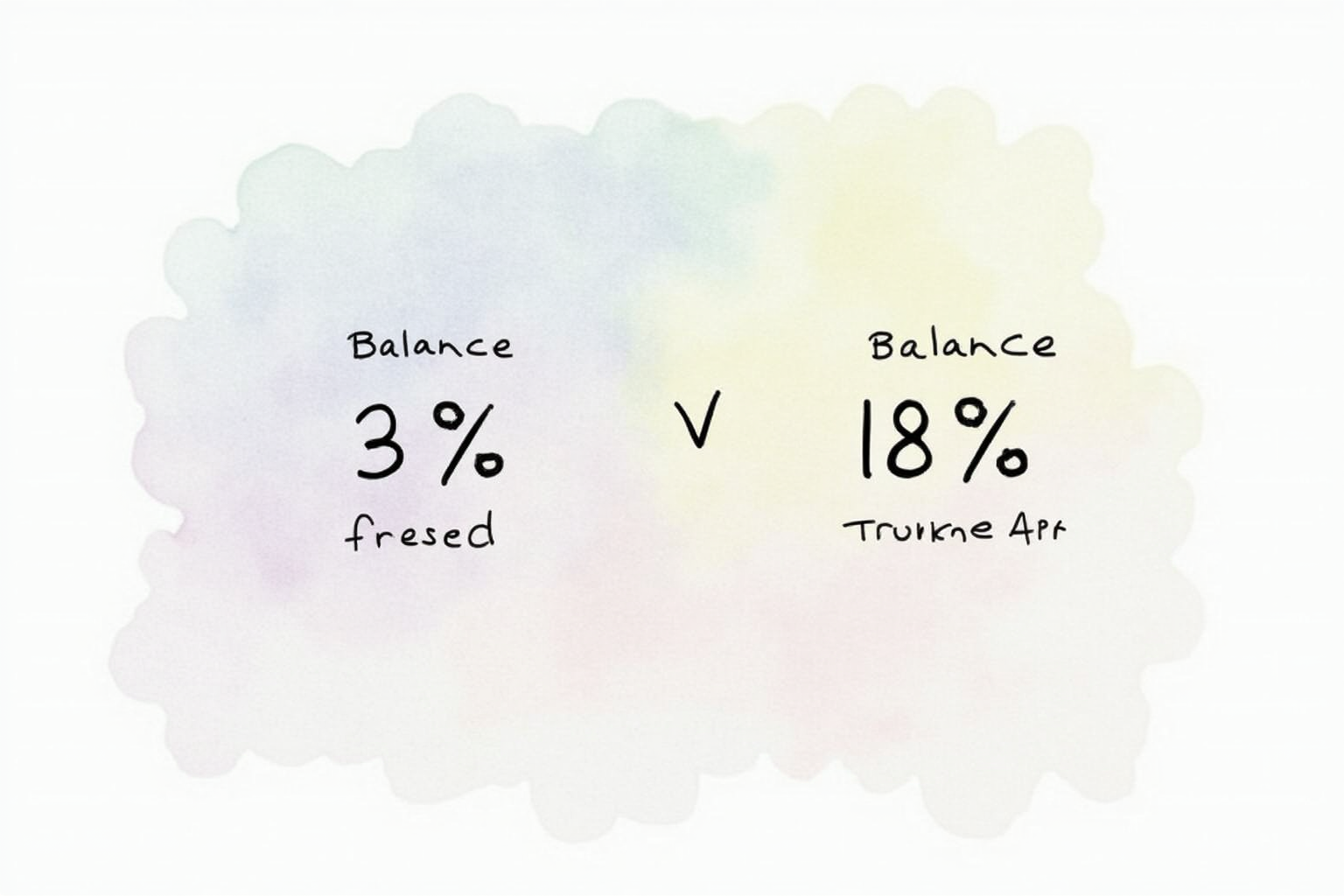
The mechanic is straightforward. You apply for a new credit card offering 0 percent APR on balance transfers for a promotional period (typically 12-21 months). After approval, you transfer the debt from your existing high-rate card(s) to the new card. The new card charges a balance transfer fee (typically 3-5 percent of the transferred amount) but does not charge interest on the transferred balance during the promotional period. Pay off the balance before the promo expires and you have effectively borrowed money at just the transfer fee rate.
The math: 10,000 dollars at 22 percent APR generates roughly 1,900 dollars annual interest. Transferring to a 0 percent card with 3 percent fee costs 300 dollars upfront but saves 1,900 dollars in interest if paid off within the promo period. Net savings: 1,600 dollars over the year. For users carrying debt at 22-26 percent APR, this is essentially free money waiting to be claimed.
Top Pick — Longest 0% Period

Citi Diamond Preferred Card
Price · $0 annual fee / 21 months 0% APR on balance transfers
+ Pros
- · Longest balance transfer 0% intro period available in 2026
- · 3% balance transfer fee — standard rate
- · No annual fee makes long-term carry inexpensive
- · Citi's larger transfer limits accommodate big debt
− Cons
- · Standard APR after promo period in 18-29% range
- · Citi cards cannot receive transfers from other Citi cards
Citi Diamond Preferred is the right choice for users wanting maximum payoff timeline. The 21-month 0 percent APR on balance transfers is the longest in the major-card market as of 2026. For a 10,000 dollar transfer at 3 percent fee (300 dollars), you have 21 months to pay off the principal without any additional interest cost. That is 476 dollars per month minimum to clear the debt — affordable for most users carrying this debt load.
The 21-month window provides flexibility that shorter promo periods do not. If your income is variable (commission-based, freelance), the extended timeline accommodates leaner months without falling behind. The honest trade is that Citi Diamond does not offer rewards on purchases — it is a pure balance transfer card. For users who want a card to keep using after payoff, Wells Fargo or Discover may suit better.
Lowest Fee Pick — Best For Debt Under 5K

Wells Fargo Reflect Card
Price · $0 annual fee / 18 months 0% APR / 3% balance transfer fee (min $5)
+ Pros
- · Cell phone protection benefit included
- · Roadside assistance benefit included
- · 18-month intro period with extension option to 21 months
- · Standard rewards earning on post-payoff purchases
− Cons
- · 3% fee is standard, no breakthrough fee advantage
- · Shorter intro period than Citi Diamond
Wells Fargo Reflect is the right choice for users wanting a balance transfer card that also functions as a long-term cards keeper. The 18-month 0 percent APR provides enough runway for typical debt loads while the included benefits (cell phone protection, roadside assistance, rewards on purchases) add value beyond the balance transfer use case. Many users keep the Reflect card after payoff as a daily-purchase card.
The 18-month period vs Citi’s 21-month is meaningful for users with debt loads requiring the full payoff timeline. For 10K debt requiring 555 dollars monthly, you need every month of the 18-month window. The 3-month difference matters. For users with lighter debt loads (under 6K dollars) where the math works comfortably within 18 months, Reflect’s broader feature set makes it the better long-term card.
Quick Win Pick — Best For Smaller Balances
Citi Simplicity Card
Price · $0 annual fee / 12-21 months 0% APR / 3% fee
+ Pros
- · No late fees ever (rare in credit card market)
- · No penalty APR even if you miss payments
- · Easy approval relative to other balance transfer cards
- · 0% APR on purchases plus balance transfers
− Cons
- · Promotional period varies — sometimes only 12 months
- · Standard purchase rewards not included
Citi Simplicity is the right choice for users with smaller balances or shaky payment history. The “no late fees ever” feature is unique among balance transfer cards — most cards charge 30-40 dollar late fees plus trigger penalty APR (26-30 percent) on the entire balance if you miss payments. Simplicity’s structure protects users from this cliff entirely.
The 12-21 month range (current promo varies) makes Simplicity less predictable for long-debt-cycle planning than Citi Diamond. But for users wanting forgiveness of occasional missed payments without the penalty consequences, Simplicity’s structure justifies the trade. Particularly suited for users in financial transition (job loss recovery, medical emergency) where payment timing may slip.
What To Avoid
Three balance transfer patterns should not be your default. Cards with balance transfer fees above 5 percent (some store cards, smaller-issuer cards) erode the savings from 0 percent APR. Cards offering balance transfer on purchases only — read the disclosure carefully because “introductory APR” sometimes applies only to new purchases, not transferred balances. Cards from the same issuer as your debt — transfer restrictions typically prohibit this. Choose a different bank for the new card.
The Practical Process
The mechanics for a successful balance transfer take 60-90 minutes total.
Step 1 (15 min): Compare cards on Bankrate, NerdWallet, or directly from issuer sites. Choose based on debt size, payoff timeline you can commit to, and credit score.
Step 2 (30 min): Apply for the new card. Provide income information honestly. Verify your existing cards (where the debt currently sits) are with different issuers than the new card. Wait for approval (typically same-day to 7 days).
Step 3 (15 min): Once approved, request the balance transfer from the new card’s online portal. Specify exact amounts to transfer from each current card. Verify the transfer fee will be added to your new card balance.
Step 4 (5-21 days): Wait for the transfer to complete. During this time, continue making minimum payments on the original cards. The transfer typically settles within 7-14 business days.
Step 5 (post-transfer): Confirm the original cards show paid balance. Decide whether to keep the original cards open (helps credit utilization ratio) or close them (avoid temptation to rebuild balance). Most users benefit from keeping original cards open with zero balance.
Bottom Line
Citi Diamond Preferred for users wanting maximum 21-month payoff window. Wells Fargo Reflect for users wanting long-term keeper card with 18-month transfer period. Citi Simplicity for users wanting no-late-fee protection during financial transition. All three deliver substantial interest savings for users with credit scores above 670 carrying 5K+ in high-APR debt.
For more debt strategy see our payoff strategy analysis, student loan refinance, and debt payoff category.